
Diagnosing Diabetes
Diabetes Screening
Testing for diabetes should be done at age 45. If normal, repeat every 3 years. Testing should be done at a younger age, and more frequently in persons 45 and older, who:
- • Are obese (>120% desirable body weight or a body mass index (BMI) >27 kg/m2)
- • Have a first-degree relative with diabetes
- • Are a member of a high-risk ethnic population (African American, Hispanic, Native American, Asian)
- • Delivered a baby weighing over 9 lb. or were diagnosed with Gestational Diabetes Mellitus
- • Are hypertensive (blood pressure >140/80)
- • Have an HDL cholesterol level < 50 mg/dl
- • On previous testing, had Impaired Glucose Tolerance or Impaired Fasting Glucose
Diagnosing Prediabetes
Prediabetes is the state at which plasma glucose levels, either fasting or after meals, are higher than in healthy people but not high enough to be diagnostic of diabetes (see below).
Prediabetes is diagnosed when fasting plasma glucose is between 100 and 125 mg/dl (“impaired fasting glucose”) or glucose is 140 - 199 mg/dl at 2 hours after ingesting 75 grams of glucose during an oral glucose tolerance test (“impaired glucose tolerance”).
Hemoglobin A1c (A1c) cannot be used to diagnose prediabetes because the relationship between average blood glucose and A1c is complex and differs among individuals, depending on their underlying medical conditions as well as ethnicity.
Diagnosing Diabetes
There are 4 ways diabetes can be diagnosed:
1. After at least 8 hours of not eating or drinking anything, blood is drawn and the Fasting Plasma Glucose is measured. A result of >126 mg/dl is indicative of diabetes. This is the preferred diagnostic test because of its ease of administration, convenience, and lower cost.
2. Before diagnosis of diabetes can be confirmed, the result (fasting plasma glucose >126 mg/dl) needs to be repeated on a different day. Random (sometimes called “casual”) Plasma Glucose can also be done to diagnose diabetes. This test can be done at anytime without regard to the time of the last meal. A result higher than 200 mg/dl with classic symptoms (increased hunger, excessive thirst, and weight loss) denotes diabetes. If there are no symptoms the blood test has to be done on a different day.
3. Oral Glucose Tolerance Test, involves drinking glucose dissolved in water and then having blood drawn two hours later. A result of >200 mg/dl signifies diabetes. To confirm the diagnosis, the test should be repeated on another day.
4. Glycated hemoglobin (hemoglobin A1c, A1c) was adopted by the American Diabetes Association as another way to diagnose diabetes. Level of 6.5% and above signifies diagnosis of diabetes. This test has not been accepted by other organizations yet as a reliable diagnostic criterion.
Diagnostic criteria are not treatment goals.
Targets of Treatment
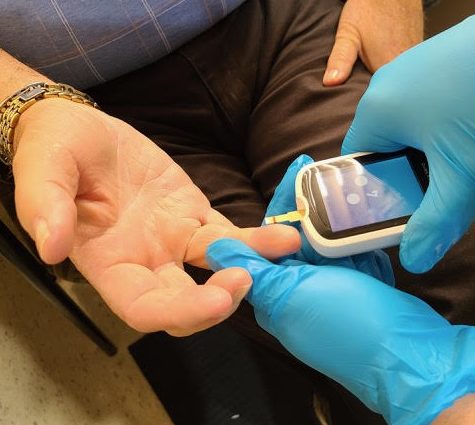
For patients checking their blood glucose levels, the American Diabetes Association guidelines call for preprandial (before meals) capillary glucose 70-130 mg/dl (5.0-7.2 mmol/l), peak postprandial (after meals) capillary glucose under 180 mg/dl and 100 -140 mg/dl at bedtime. The long-term control is assessed by a test called hemoglobin A1c (HgbA1c). An A1c score of 5.7 to 6.4 percent indicates prediabetes and an A1c level of 6.5 percent or higher is diagnostic of diabetes. The American Diabetes Association recommends that most people with diabetes maintain a goal of keeping A1C levels below 7 percent in order to properly manage their disease. The American College of Endocrinology suggests A1c at or below 6.5%, premeal glucose under 110 mg/dl and 2-hour after meal glucose of under 140 mg/dl.